Thursday, February 16, 2012

Film of DaVinci show makes artist available to large, appreciative audience

Leonardo da Vinci's works such as "The Lady with an Ermin," above, can be seen in 'Leonardo da Vinci: Painter at the Court of Milani.' Below: A crew sets up. 

Lady with an Ermin.JPG
Last November, when the National Gallery in London opened the exhibition “Leonardo da Vinci: Painter at the Court of Milan,” people lined up around the block before dawn in the hope of getting tickets. And then they did it again, the next day. And the next.
So many people wanted to see the show because it was such a rare event: It was the first exhibition in modern times devoted to Leonardo as an artist, not as scientist or architect or anatomist or aeronautics engineer or, often enough, plain old wizard. And it brought together more of his paintings in one spot (probably) than at any time since they were painted: Of the 15 or so widely accepted oils that survive by Leonardo, about half are included. The paintings are so valuable and so fragile that it’s unlikely they will ever be seen together again, certainly not in our lifetimes.
And since so many people were unable to get tickets for “Painter at the Court of Milan,” which closed two weeks ago, a high-definition film that walks through the exhibition, shot the day before its official opening, will be released in more than 500 theaters across the United States today, including more than a dozen theatres in New Jersey.
The excitement for this particular show is easily explained. In a cluster of small basement galleries, the National had installed two ravishing portraits of women, the “Lady with an Ermine” and “La Belle Ferronniere,” both believed to have been involved with Leonardo’s patron, the Milanese usurper Ludovico Sforza; the almost complete portrait of a handsome young man known as “The Musician”; the unusual “The Madonna Litta,” from the Hermitage in St. Petersburg; and both versions of “The Madonna of the Rocks.” The largely unfinished “St. Jerome” is also here.
Britain’s royal collection houses most of the best-known of Leonardo’s drawings, including the cartoon of “The Virgin and Child with St. Anne and St. John the Baptist,” and for this show they’ve brought out 33 of the finest plus another 17 on loan from institutions around the world. The famous sketches for the heads of the apostles have been placed around the finest contemporary copy of “The Last Supper,” by Il Giampetrino. Disputed or uncertainly attributed pictures, like “Christ as Salvator Mundi,” sometimes ascribed to Boltraffio, are also included.
The greatest curatorial coup was bringing the National Gallery’s version of “Madonna of the Rocks” into proximity with the Louvre’s version of the same picture. Both were attributed to Leonardo in his lifetime, and the pictures are remarkably similar. But most experts who’ve seen “Painter at the Court of Milan” now agree that only the Louvre version is entirely by Leonardo’s hand, and the British version is an authorized copy by Ambrogio de Predis, in which the master had only limited participation — though he took his full share of the payment for its delivery.
“Leonardo Live” is hosted by the very British-sounding pair of art historian Tim Marlow and TV presenter Mariella Frostrup. It documents not only the arrangement of the pictures and their careful lighting, but also the relatively radical step of carving and gilding new frames for many of the pictures in a faux 16th-century style. And it tries to get at the mysterious fascination Leonardo can still exert across half a millennium.
Where to see it

“Leonardo Live” will be shown in 500 movie theaters around the country with screenings today only at select venues in New Jersey. Showtime at most theaters is at 7 p.m. For a complete list of theaters or to buy tickets online, visit fathomevents.com.

• Digiplex Cranford 25 North Ave., Cranford (908) 276-9120
• AMC Clifton Commons 16 405 State Route 3, Clifton (973)614-0966
• Showplace Theatre 650 Plaza Drive, Seacaucus (201) 210-5364
• Commerce Center 18 2399 Route 1, North Brunswick (732) 940-8361
• AMC Garden State 16 1 Garden State Plaza, Paramus (201) 291-8414
• AMC Rockaway 16 363 Mount Hope Ave., Rockaway (973) 328-4255
• Edgewater 16 Multiple Cinemas 339 River Road, Edgewater (201) 840-6665
• AMC Hamilton 24 325 Sloan Ave., Trenton (609) 890-7937
Leonardo da Vinci’s works such as The Lady with an Ermin, above, can be seen in “Leonardo da Vinci: Painter at the Court of Milani.” Below: A crew sets up.

First U.S. retrospective of pioneering Chilean artist Juan Downey opens at Bronx Museum of the Arts

This piece from artist Juan Downey's Continental Drift series is among the works on display in "Juan Downey: The Invisible Architect" at the Bronx Museum of the Arts.

This piece from artist Juan Downey's Continental Drift series is among the works on display in "Juan Downey: The Invisible Architect" at the Bronx Museum of the Arts.

The exhibit “Juan Downey: The Invisible Architect” is an eclectic assemblage of drawings, videos and installations exploring the life and work of a pioneering video artist.
Downey, a trained architect turned artist, died in 1993 at his home in Manhattan.
This exhibit at the Bronx Museum of the Arts marks the first U.S. retrospective of the Chilean artist’s work which spanned from the 1970s to the 1990s.
“Downey revolutionized the field of video art and pioneered an art form that has had continued relevance for contemporary artists working today,” said museum director Holly Block.
The exhibit also features paintings, photographic installations and the artist’s notebooks, which are on view for the first time.
Although not chronological, the exhibit follows Downey’s preoccupation with politics, art history, Latin American identity, western culture and his own identity.
Downey studied printmaking in Europe but started experimenting with different art forms on his return to the U.S. in the mid 1960s.
“He was very influenced by people he met in Paris, by the kinetic artists who were working with machines,” said guest curator Valerie Smith, adding that his early work included detailed architectural drawings of machines.
Some of Downey’s best known works are also on display including “Video Trans Americas” which features footage of the indigenous peoples he met on his travels through North and South America. The footage is complemented by several of the artist’s “meditation drawings.”
“He meditated everyday,” said his widow, Marilys Downey, at a special viewing at the museum last week. “He would come out of a meditation and he would be in that grey zone, and he would do a drawing. He did one everyday. We have hundreds of them.”
Other well-known pieces on display are “The Thinking Eye” and “About Cages,” a video installation that includes live birds.
“Juan Downey: The Invisible Architect” runs through May 20 at the Bronx Museum of the Arts, 1040 Grand Concourse. For more information, visit bronxmuseum.org.
n 24 Hour Theatre Festival
The Poor Mouth Theatre Company’s annual 24 Hour Theatre Festival is back.
Six writers will meet on Friday, Feb. 25th and be assigned a topic and a certain number of actors. Writers then have 24 hours to write, rehearse and produce a 10-minute play to be performed the next night.
The unpredictable and comical results come to the stage at 8 p.m. on Saturday, Feb. 26 at An Beal Bocht Café, 445 W. 238th St. in Riverdale. For more information, call (914) 250-1422.

Young at art

A bust of Albert Einstein at India Art Fair in Delhi 
A bust of Albert Einstein at India Art Fair in Delhi
Apoorva Subbanna, 22, attributes her interest in art to her bloodline. Born to contemporary artist Kuppagadde Rudrappa and textile designer and art curator Seema, Apoorva grew up in a blaze of colours and designs. Four months ago, she bought a ceramic sculpture by Debashish Das - a blue and green bowl with female figurines - for Rs 30,000. That amount may sound small in the world of art auctions, but, for someone yet to start earning, it was her life's savings.

Ashish Shah
Ashish Shah has designed his house around the artworks he has bought
"I bought it with my own savings, as I really liked it. Desmond Lazaro, David Kracov and Gordon Cheung are some of the artists I look up to. Their works are expensive, but I hope to buy them some day," says Subbanna. Seema adds: "Youngsters these days are well-read and welltravelled, and are increasingly investing in art."

Her statement is backed by auction houses and galleries, whose number has been on the rise. "The market is driven by young collectors who educate and acquaint themselves with art before buying," says Maithili Parekh, India Director of auction house Sotheby's.

Curator Ina Puri, too, talks of young collectors, many of whom believe art to be a safe investment. "There is no overnight rise or fall in prices and they have been going up gradually," she says.

 ART OF THE MATTER
The art market is now driven by young collectors
First-time buyers for 40 per cent of sales at the recent India Art Fair
Visiting art exhibitions, following proper paperwork and documentation are must-do before investing in art


But profit is not always the motive. Mumbai-based architect Ashish Shah, 32, started collecting artworks when he was in school, and has not re-sold any. His house is designed around works by Sudarshan Shetty, S. H. Raza and Shilpa Gupta. Regardless of the motive, there is no doubt that art buyers are getting younger. Consider the statistics from the recent India Art Fair in New Delhi. "Of the sales, about 40 per cent were generated by those investing in art for the first time," says Neha Kirpal, the fair's founder and organiser.
Rasika Kajaria
Rasika Kajaria's gallery in Delhi showcases young artists
One of those first-time buyers is Priyanka Khanna, 30, who works with a fashion magazine and bought a piece by New York-based artist Aakash Nihalani. "I have always loved art. My mother exposed us to galleries and museums across the world as children," she says.

The bloodline worked for 34-year-old Pooja Chandra, too, albeit an acquired one. A partner with Delhi-based consultancy firm Cicero Associates, she is landscape artist Satish Chandra's daughter-in-law. Pooja's foray into the world of art coincided with her marriage, and surged with the entry of artists like Vivan Sundaram into photo prints, which are more affordable. She owns six Sundaram photo prints worth Rs 1.5 lakh and is eyeing an A. Ramachandran sketch worth Rs 3 lakh. "People inherit jewellery and property, I inherited art," she says.
A painting by F.N. Souza

Blue Painted Head, a sculpture by Ravinder Reddy, on display at India Art Fair in Delhi
A painting by F.N. SouzaJewellery has been at the back of the mind of other young buyers as well, especially the women. "Buying art is similar to investing in jewellery. One does not buy it only to sell it, and one must like it before buying," says Jaipur-based Alankrita Sharma. The 30-year-old lawyer developed an interest in art while working at Gallerie Ganesha in Delhi eight years ago. In those days, she would buy a piece from her employer and pay for it through monthly deductions in salary. Sharma has a piece of advice for her ilk: " Young collectors like me can start with younger artists, who will grow as we grow." She bought a painting by contemporary artist Maya Burman five years ago for Rs 15,000. "The artist has made it big, and the painting must be about five times that amount now," she says.


Secret Basquiat fetches $5.8m

Jean-Michel Basquiat's Orange Sports Figure
Jean-Michel Basquiat's Orange Sports Figure (1982)
 
GRAFFITI pioneer Jean-Michel Basquiat's Orange Sports Figure, which was recently found to be signed in invisible ink, has sold for more than £4 million ($5.8m) at a London auction.
The 1982 work, which depicts a figure emblazoned with Basquiat's iconic crown motif, eventually went under the hammer for £4,073,250 at Sotheby's Contemporary Art Evening Auction on Wednesday.
The auction house this week revealed it had discovered Basquiat's signature in invisible ink after viewing the painting under ultraviolet light.
Basquiat was born in Brooklyn, New York, in 1960 and began working as a graffiti artist in the late 1970s before becoming a neo-expressionist during the next decade. During a varied career, he collaborated with pop art godfather Andy Warhol, played in a band with US film actor and director Vincent Gallo, appeared in a video for the band Blondie and briefly dated the woman who would go on to become a global pop queen: Madonna.
Basquiat died in 1988 after taking a heroin overdose following a battle with addiction and depression.
AFP
The top-selling lot of Wednesday's sale was German visual artist Gerhard Richter's Abstraktes Bild, which sold for £4,857,250, exceeding its pre-sale expectations of £3m-£4m.
Cheyenne Westphal, Sotheby's chairman of contemporary art Europe, says: "We witnessed a huge depth of international bidding right across the auction, with buyers coming from no fewer than 20 countries.
"Gerhard Richter once again dominated, with all six of his works selling for an aggregate sum of £17.6m."

Hundreds of art fans flock to see Leonardo Da Vinci exhibition at Birmingham Museum and Art Gallery

Crowds outside the Leonardo Da Vinci exhibition at Birmingham Museum and Art Gallery


IT’S a scene not witnessed since the Staffordshire Hoard first went on public display.
Nearly 1,000 people are flocking to Birmingham Museum and Art Gallery every day to see the blockbuster Ten Drawings exhibition featuring the work Leonardo da Vinci.
Da Vinci exhibition
More than 31,500 visitors have seen the once-in-a-lifetime show since it opened on January 13 and the public’s appetite for the master shows no sign of slowing.
The exhibition’s busiest day so far was Monday when 1,384 people visited, the highest attendance at the gallery since the Staffordshire Hoard was first on display in 2009.
The drawings are taken from the Royal Collection and are on tour to celebrate the Queen’s Diamond Jubilee.
Coun Martin Mullaney said: “I am delighted by the huge public response to this magnificent show at Birmingham’s world class Museum and Art Gallery.
“This exhibition, which marks the start of the Queen’s Golden Jubilee celebrations, is further evidence of the city’s reputation for attracting high profile exhibitions that will bring both local people and visitors to the city.”
The drawings illustrate the scope of Leonardo’s interests which spanned painting and sculpture, engineering, botany, mapmaking, hydraulics and anatomy.
One of the main attractions is The Head of Leda. The work, which is based on Greek mythology, was a preparatory drawing for the painting Leda and the Swan which was destroyed around 1700.
The Royal Collection contains a group of around 600 drawings by Da Vinci, which are preserved in the Royal Library at Windsor Castle.
The exhibition runs at Birmingham Museum & Art Gallery until March 25 and admission to the show is free.

Art Review: Critics' Award at Gallery of Art Critics

Fifth annual Critics' Award has theme of 'expanded painting'

Art Review: Critics' Award at Gallery of Art Critics
Vytiska's A Burning Home is Warm is one of the show's more traditional paintings.
Half a decade ago, the Czech art scene saw a sudden proliferation of young artists' prizes. In addition to the Jindřich Chalupecký Award for artists under 35, established in 1990, the National Gallery jumped in five years ago with the NG 333 Award for under-33s, and that same year the Association of Czech Art Critics founded the Critics' Award for Painting, which recognizes the upcoming generation of painters under 30.
An exhibition of the eight finalists for this year's Critics' Award is now at the Gallery of Art Critics (Galerie Kritiků). Josef Achrer (born in 1982) won this year's award, but there was plenty of acknowledgment to go around, as there was also a two-way tie for second place, a third-place award and a Viewers' Choice Award. Additionally, Czech Centers will offer one artist an exhibition abroad.
This year's theme was "Expanded Painting," which has also been the major theme at every Prague Biennial so far. What does this mean? Essentially, it extends the medium beyond the classical borders of pigment applied with a brush to a rectangular surface that is displayed on a wall. Traditional painting didn't include three-dimensionality, movement, and so on.
Among these eight artists, we see, for example, how installation can explore some of the same areas as painting traditionally does, such as composition, color and space. The spectrum of "expanded painting" is quite broad.
Critics' Award
at Gallery of Art Critics (Galerie Kritiků) Ends Feb. 26. Jungmannova 31 (in Palác Adria), Prague 1-New Town. Open Tues.-Sun. 11 a.m.-6 p.m.

As long as there is at least something painterly in it, "expanded painting" might be a three-dimensional canvas whose materiality connects painterly space and architectural space; it can be mainly drawing, or installations combining painting and objects, or cut-out paper silhouettes collaged, or mixed-media objects shaped like canvases.
Paradoxically, the winner of the 2012 Critics' Award is showing canvases that at least on the surface resemble traditional paintings. Two of Achrer's three canvases here are strongly reminiscent of traditional Chinese landscape painting. A sparsely painted mountain landscape breaks apart into pixels when viewed at close range, while another one, with white paths leading through a murky gray landscape, takes on the appearance of a lithograph when viewed from a distance. His third painting is a paean to Modernism's love of geometry and primary colors.
Achrer was a founding member of the art group Obr. (an abbreviation for obraz, or painting, and also meaning giant) with another of this year's finalists, Martin Krajc (b. 1984) - who placed third in the competition. Krajc's most attention-grabbing piece in the show, Every Sunday Morning I Like Milk for Breakfast, features a sculptural white spiral that seemingly originates outside the space of the canvas and whose dynamic is rushing toward the canvas, where it splashes over the face of a realistically rendered female figure. The two-dimensional surface is broken into Mondrian-like rectangles with yellow and orange lines. His second piece, an abstract painted in primary and secondary colors, is painterly and expressive. Krajc is now having his first solo show in Prague at Galerie Via Art.
Placing second were two artists in a tie: Kamila Rýparová (b. 1987) and Tomáš Bárta (who was born in 1982 and also currently has a solo show in Prague, at the Chodov Fort Gallery). Rýparová presents a new perspective on the humble domestic interior with an installation combining monochromatic room interiors and objects. The paintings blend rigid geometry and a smudgy gray surface - as if soot and hazy light were simultaneously streaming into the rooms through the windows. Nearby the paintings are small furnishings, books covered in wax and a column of gold-rimmed porcelain dishes.
In Bárta's group of five untitled works on paper, painting seems secondary to drawing. There is no lack of color, but the painting takes a back seat to the drawing, which he leaves in places without any overpainting. The drawings are a riot of spontaneous geometry while playing with illusional and negative space.
The Viewers' Choice award went to Dana Sahánková (b. 1984). Her diptych made with ink and brush on canvas is a studio interior crawling with cats. In fact, the entire scene seems to have sprouted fur, from the shelves and tables to the floor. In places she leaves pencil drawing unadorned, which creates a contrast between the immediacy of her drawing and the skilled and painstaking brushwork.
Five out of eight finalists are formally recognized as prize-winners, but the other young artists - Svetlana Fialová (b. 1985), Patrik Kriššák (b. 1986) and Jan Vytiska (b. 1985) - are also names to watch.
The Critics' Award annually affirms that painting - so many times declared dead - continues to be a lively form of communication in Czech art, especially in the zone where painting meets other media.


Beijing arts and crafts on show in Taipei

Taipei, Feb. 16 (CNA) An exhibition on Beijing's modern arts and another on its traditional arts and crafts kicked off Thursday in Taipei as part of Beijing Culture Week that is being held Feb. 16 to Mar. 11 in Taiwan.

One of the exhibitions features some 40 paintings, photographs, sculptures and installation works by artists from Beijing's 798 Art Zone, while the other showcases about 200 traditional art and craft pieces from the Chinese city.

Cloisonne enamel ware, shadow plays, Beijing opera masks, palace lanterns, clay, dough and silk figurines, traditional kites, paper cuts, and Chinese musical instruments are among the displays.

In addition , 14 masters of traditional Beijing arts and crafts will demonstrate their skills at the exhibition.

"I hope the exhibition will help Taiwanese visitors gain a better understanding of traditional Chinese craft," said Wu Jingxin, the fourth-generation owner of Hong Yin Zhai, a 100 year-old shop that makes traditional Chinese musical instruments.

Intricately designed Chinese flutes, wind instrument suona and sheng, a free reed instrument consisting of vertical pipes, are on display at the exhibition.

The two exhibitions will run until Feb. 21 at Songshan Cultural and Creative Park.

Since September 2006, cultural agencies on each side of the Taiwan Strait have been organizing annual culture weeks to promote artistic and cultural exchanges across the Taiwan Strait.

Wang Hui, director of the Beijing City government's information office, said at the opening of the exhibitions that she believes the cultural exchanges this year will allow new opportunities for cooperation between Beijing and Taipei.

Beijing Mayor Guo Jinlong and a delegation of more than 20 high-ranking Beijing officials and 100 other people were scheduled to arrive in Taiwan later Thursday for a six-day visit to promote cultural exchanges between the two sides.

As part of Beijing Culture Week, the Beijing People's Art Theatre will perform its popular play "Li Bai" at the National Sun Yat-sen Memorial Hall Feb. 20-23.

Northern Kunqu Opera Theatre will also stage "The Dream of the Red Chamber" at the same venue Feb. 26-29. Guo, who is expected to attend Beijing Culture Week events, will be the first high-level Chinese official to visit Taiwan after Taiwan's presidential election last month.

The 798 Art Zone is a thriving artistic community in an abandoned factory complex in the Chaoyang District of Beijing. It covers an area of 300,000 square meters and houses close to 500 art institutions and groups from around the world. In 2003, Time magazine rated the art zon

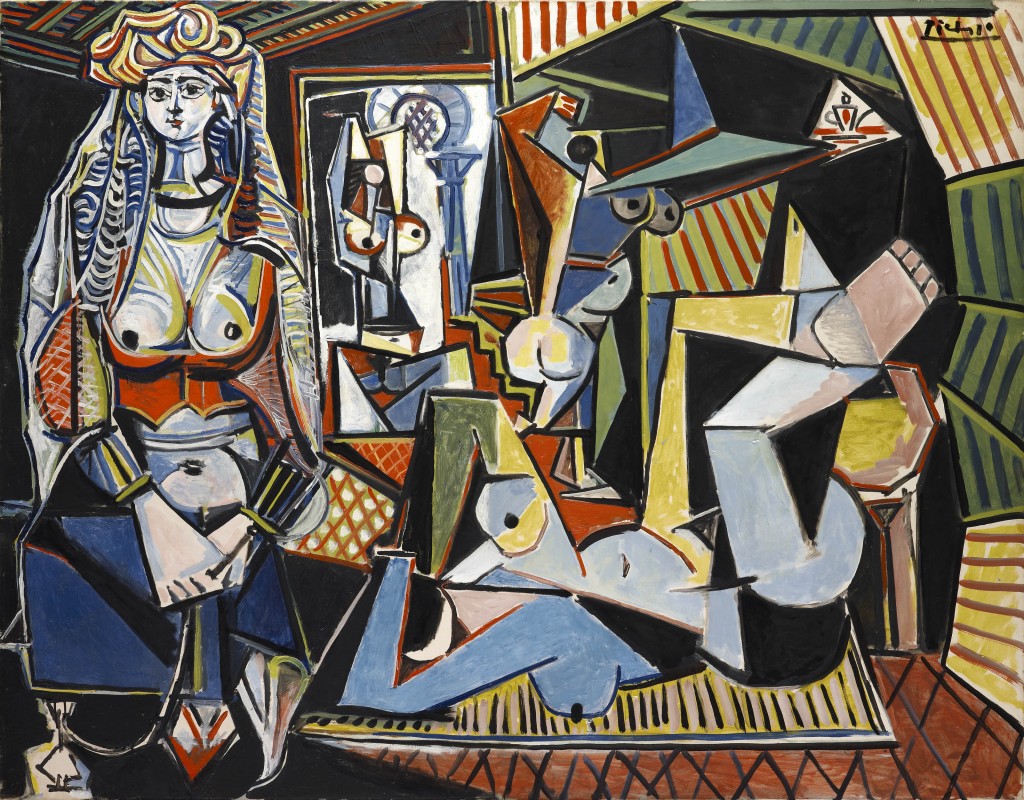
Picasso & Modern British Art - review

Picasso
Companion piece: Picasso’s The Source, 1921
 
It is perhaps useful to remind visitors to Tate Britain's new exhibition, Picasso and Modern British Art, just how long ago Picasso was and how, in this particular context, the term Modern British is stretched to embrace the full century from Duncan Grant, whose first tame and tentative Picassian experiment was made in 1912, to David Hockney, who is still occasionally Picassian now.
Picasso was born in 1881 when Victoria had two more decades on the throne ahead of her, British forces were withdrawn from Afghanistan, Gilbert and Sullivan presented Patience, and Lord Leighton was president of the Royal Academy.
He died in 1973, all but 40 years ago, when the Cold War was an ever-present threat, Britain joined the European Economic Community, our economy was wrecked by a cartel of Arab oil-producing countries, Hockney was into his first maturity and the infinitely forgettable Tom Monnington was PRA.
In his 90-odd years Picasso had been fin-de-siècle, had worked his way through the enchantments of periods Blue, Pink and Iberian-Negro (a term coined by Christian Zervos, his apologist), through Cubism Analytical and Synthetic, Classicism and Surrealism and into the violent distortions that succeeded Guernica (though never matching its sincerity), on and on through an astonishing range of whimsical diversions in every medium and visual quips at the expense of Velázquez, Rembrandt, Delacroix and Ingres, declining into a final phase so crude, genital and urinophilous in imagery that his friend Douglas Cooper dubbed him an old fool in the ante-chamber of death.
Early admirers in England, slavish, seeing him take himself so seriously, took him seriously too; others, including  Winston Churchill, Evelyn Waugh and a posse of Royal Academicians, would have kicked his arse; and between these lay what inexorably became a vast majority - all those incapable of thinking for themselves and anxious not to be wrong-footed by Mrs Grundy, who decided that adulation was a safer bet than arse-kicking. This is still the status quo.
Picasso was first presented to the British public in the winter of 1910-11 by the critic Roger Fry, the Saatchi-Serota of his day (though without the cash). After the hiatus of the First World War, with the Tate a Vale of Lethe and the Academy mounting only its Summer and Winter Exhibitions (the latter always art historical), our awareness in the Twenties and Thirties of what was happening abroad in art in general and with Picasso in particular, depended almost entirely on exhibitions mounted in brave small dealers' galleries - a handful only, but persistent- even during and after the Second World War.
There were two exceptions: the now notorious Surrealism Exhibition at the New Burlington Galleries in 1936, which included 11 works by Picasso, and spawned an increasingly political debate that lasted into the 1950s; and in January 1939, the exhibition at the Whitechapel Gallery of Guernica and 67 related paintings and studies; hanging for only two weeks, it was seen by 12,000 or 15,000 visitors (recorded figures vary).
This drip, drip of exposure - to which must be added his work for the Ballet Russe in London in 1919 (10 weeks a resident at the Savoy) and the ease with which the bright young things of the London art world could spend time in Paris, the rate of exchange madly favourable, meant that towards the end of the 1930s Augustus John could write enviously of Picasso as having "the greatest snob-following of our time".
This was true, but not wholly and only so. After six years of war, when our clothes were threadbare or hand-me-downs and our bellies empty on the shortest rations since the Rape of Poland, 160,000 of us queued in the bitter winter of 1945-46 to see a Picasso and Matisse exhibition mounted at the newly reopened Victoria and Albert Museum, and very few of these were snobs.
There were 30 paintings by Matisse, and by Picasso 25, all but one lent by himself and painted during the war. They were not the best - the very best of him was in Guernica and that intensely dramatic, symbolic and soul-exposing painting had so drained him that never again could he reach its emotional pitch, never once throughout all the horrors of the war, living in occupied Paris, watched all the time by Nazis, could he raise his game to take emotion further and, into his sixties, having nothing more to say, he was emasculated.
The young among the 2,500 who every day queued to see his 25 paintings could not bring themselves to admit such a falling off and, revering Picasso's reputation, sustained it in blind faith in terms then, and still, quite meaningless: so too did his old apologists and sycophants, with, in the end, only Douglas Cooper telling the unvarnished truth.
The arse-kickers were vanquished - and rightly, for their view was based on cussed misunderstanding of Picasso at his greatest, as Cubist, Classicist, Surrealist and the excoriating painter of Guernica, all beyond their comprehension; but had they acknowledged him for his first 40 years of enquiring experiment and achievement, and damned him for the slough of capricious, whimsical, skittish, teasing, clowning, erratic and mercurial nonsense into which he fell, we might now have a truer view of him.
Tate Britain's exhibition is an exploration of Picasso's influence on seven English contemporaries, with Duncan Grant, Wyndham Lewis, Ben Nicholson, Henry Moore, Francis Bacon, Graham Sutherland and David Hockney, pars pro toto, for a hundred more.
He trumps them all and even with the worst of paintings so dominates the show that he is a Nureyev dancing among amputees, a cruel spectacle as we are introduced first to the shallow mimicry of Grant, and last to the triviality of Hockney. "Damn him, how various he is," as Gainsborough once said of Reynolds, but 'twere far better said of Picasso, who in 1901 could perfectly conjure the sweet spirit of a child and fill a vase of flowers with consummate vulgarity, in 1905 evoke the hesitancy of a girl on the brink of womanhood, then plough through the intellectual (and ultimately fraudulent) complexities of Cubism and give us, in 1923, a woman of Roman antiquity clad in a chemise, the form, texture and transparency of which reached the canvas in a flurrying cat's cradle of loose brushstrokes as though Cubism, in none of its forms, had ever been invented. Again and again we must be astonished by his capability - never more so than in the room devoted to Moore, where all the sculptor's figures, bulky and contrived, are trounced by Picasso's Nude Seated on a Rock, no more than the size of a postcard and painted with the delicacy of breath, yet simply, grandly, wonderfully monumental.
This is a useful exhibition and visitors should see the chosen British artists (and others of their periods) in a new light. Lewis so swiftly escaped Picasso's influence to develop entirely independent semi- and post-Cubist mannerisms that were peculiarly his own, that he seems not to merit a place in it (his Theatre Manager of 1909 surely embodies the anti-Semitism that burgeoned in his political writing between the wars, rather than the supposed influence of Picasso's Demoiselles d'Avignon).
Nicholson began his Picassianism as a plagiarist, developed a very English scrubbed and scruffy decorative variant of Cubism, and moved on to heavyweight experiments in dark tone, interlocking flattened forms and profiles and scratched (sgraffito) outlines; for him Picasso was a nourishing rather than an overwhelming influence, soon to be discarded. Moore, on the other hand, was overwhelmed - "I am Moore," Picasso could justifiably have said. Never in such thrall, Bacon's essential Picassianisms were few and date from years when he was less a painter than a designer of furniture and carpets, and he soon escaped the influence.
As for Sutherland, his landscape impertinently titled Homage to Picasso of 1947 is so lacking in the power of the old master as to seem a feeble insult (though it may be a useful document); in other examples he adopts the idiom but seems not to understand it. Hockney's response to Picasso - whom he did not meet - provides the weakest chapter of the exhibition and is far better illustrated by the Bridlington guru's variations on a painting by Claude now assembled in the Royal Academy.
I must end with a note on Picasso's development, for he is the dominant figure and fons et origo here. The visitor with a sharp eye will observe that over a long period his various stylistic mannerisms overlap or are recovered from the past.
In an interview in 1923, published under the title Picasso Speaks, he claimed that the "several manners" to which he admitted should not be seen as evolution but as particular responses to the subject or occasion: "Whenever I had something to say I have said it in the manner in which I have felt it ought to be said. Different motifs inevitably require different methods of expression."
Picasso & Modern British Art is at Tate Britain, SW1 (020 7887 8888, tate.org.uk) until July 15. Open Sat-Thurs 10am-6pm, Fri 10am-10pm; admission £14 (concs £12.20).
Picasso
Companion piece: The Source was the inspiration for Henry Moore’s Reclining Figure of 1936. Of the seven British artists exhibited, it is Moore who most succumbed to Picasso

Christie’s art sale hits post-2008 high

Francis Bacon's Henrietta Moraes
The rare sale of a Francis Bacon painting depicting a full-figured female nude on a bed pushed sales at Christie’s Postwar and Contemporary Art auction this week to levels not seen since 2008.
When the hammer came down on the final lot, the auction house had pulled in £80.5m against expectations of between £56.7m and £84m and achieved its second highest earnings for a contemporary sale since they began in 1977.
The global economy may be struggling, but last year the auction houses Christie’s and Sotheby’s enjoyed strong revenues and are hoping that 2012 will continue the two-year bull run for art works at the top end of the market.
“There is a lot of cash around at the moment and not many places to put it. The financial crisis is not really having an effect on the super rich who are buying these works,” said Robert Read, head of art and private clients at specialist art insurer Hiscox.
Art experts say that growth at the top end of the market has been partly driven by a new wave of Asian billionaires, especially from China. Their investment helped drive Christie’s sales up 9 per cent in 2011 to a record £3.6bn.
Sotheby’s reports its results this month, but has said total auction sales rose 14.5 per cent in 2011, with contemporary art up 34 per cent.
Steven Murphy, chief executive of Christie’s, said growth had been driven by “collectors collecting more”, and “globalisation and the ease of connecting online pre-sale, which has exploded”.
After a sharp drop in interest following the 2008 crisis, global investors have turned back to art as a way to diversify portfolios and hedge against the negative effects of volatile equity and currency markets and high inflation.
In a survey of more than 70 bankers and investment managers by wealth management forum Family Bhive, art was identified as the asset class with the best chance of positive returns this year, ahead of alternative investment funds, soft commodities and property.
“The high level of uncertainty created by the eurozone crisis means that assets with intrinsic value are in increasing demand,” said Caroline Garnham, Family Bhive chief executive.
But rather than build up private collections, more investors are opting to buy into collective investment funds that provide returns by selling off individual pieces of art over a number of years.
Encouraged by record auction house sales, fund managers have started to compete more fiercely with private dealers for a stake in the market.
Many funds have linked up with wealth managers such as Santander and Citi Private Bank to provide access to clients whose interest in art is limited to the financial returns on offer.
Philip Hoffman, the former Christie’s finance director who set up the Fine Art Group of funds, said interest from emerging markets was still helping to drive demand.
“The Qatari government is dominating the market right now, as they purchase items for the country’s new museum, and we have Chinese fund managers approaching us to talk about including art in their portfolios,” he said.
“But we’ve also seen an increase in art [investment] from clients in countries such as Greece, Spain and Saudi Arabia, where investors are unsure how their local currency will hold up.”
The auction houses are now in the middle of an important fortnight of art sales. Francis Bacon’s portrait of “Henrietta Moraes” fetched £21.3m at Christie’s on Tuesday night. Its Impressionist and Modern auction last week pulled in £135m, beating its pre-sale target of £86.2m-£127.1m.
Helena Newman, chairman of Impressionist & Modern Art Europe at Sotheby’s Europe, said there had been strong bidding for surrealist and fauvist works. Sotheby’s auction of Impressionist and Modern Art this month reached £96m against pre-sale estimates of £94m-£135m.
Sotheby’s Contemporary Art evening auction on Wednesday fetched £50.6m, surpassing pre-sale expectations of £49.7m.
The top-selling lot was Gerhard Richter’s Abstraktes Bild which sold for £4.8m, exceeding its pre-sale estimate of £3m-£4m.
“Modern, Impressionist and post-Impressionist is where you are seeing the big prices at the moment. The focus is on the top end of the market,” said Mr Read.

Another Small Triumph for Modern Art


Gerhard Richter's monumental "Abstract Picture" from 1991, one of a number of Richters that were snapped up Wednesday. 
LONDON — Supplies are getting scarcer in contemporary art. Sotheby’s sale Wednesday evening left no doubt about that. Three of the 66 cataloged lots had been withdrawn and, of those that remained, five were drawings by Lucian Freud. The shortage does not reflect a loss of interest on the buyers’ part. They have never been so bullish.
While more modest in scope than the Christie’s sale on Tuesday, the Sotheby’s session was a triumph — the 57 lots that sold added up to £50.68 million, or about $80 million. Its makeup revealed a more marked interest than ever in the figural aspects of contemporary art. Interestingly enough, this was not at the expense of abstractionism, as the performance of Gerhard Richter’s work amply demonstrated.
The first big score greeted the appearance of Mr. Richter’s monumental “Abstract Picture,” with columns of red streaks vibrating across a ground varying from silvery to gray. The canvas, 200 by 140 centimeters, or 783/4 by 55 inches, sold for £4.07 million, within the estimate.
A few minutes later, a figural view of floating icebergs titled “Ice” made £4.3 million. Painted in 1981, it is half the size of the red “Abstract Picture,” which makes the price of “Ice” decidedly more impressive.
Add that a third Richter dated 1989, “Child,” which is strictly abstract despite its title, made £3 million. It is exceptionally beautiful, with its suggestion of water running down a panel and carrying away the debris of a destroyed world. Occasionally, beauty can matter in contemporary art.
If doubts could be entertained at that point about the comeback of the figural aspects of contemporary art, these were dispelled by the competition that broke out over two landscapes by the 91-year-old Zao Wou-Ki. The Chinese painter of the Paris school had a very long spell as an abstractionist. Eventually he returned to landscape painting, largely as a way of asserting his Chinese roots. The fact that he signed a landscape dated Jan. 10, 1991, both in Chinese ideograms and in the Romanized form of his name appears to confirm that.
Bidders raved over the untitled painting, which precisely doubled its high estimate at £1.6 million.
In a second landscape dated Dec. 28, 1999, the Western legacy absorbed by Mr. Zao vividly comes out. It reflects memories of Turner and of the English watercolorists of the late 18th and early 19th centuries. These are definitely more blatant than the connection with a 1668 scroll by Wu Li illustrated by Sotheby’s in the catalog entry. The masterpiece rose to £1.83 million.
Parodies of figuration also aroused interest. An outsized cartoon done in 1982 by Jean-Michel Basquiat in his usual manner inspired by the graffiti of street artists brought an extremely generous £4 million.
Moments later, the gentler fun poked at the establishment by Roy Lichtenstein was well received. “Nude in Apartment” of 1995, which harks back to the pop artist’s style of his youth, roughly matched the highest expectations pinned on it at £937,250. The price is vast for a work in acrylic on paper collage, printed paper collage and board, which are fragile media that rule out permanent exposure to light.
A striking expression of the new yearning for figuration was the zest with which the five drawings by Lucian Freud were chased. Their style is not merely conservative. It revives the manner of masters active in the mid-19th century. This is as true of the “Head of Success II,” sold for £253,250, as it is of the sketch of Lord Goodman done for the front cover of the London Review of Books of July 18, 1985. The charcoal would not be a surprise from a realist artist of the 1860s. Vivid competition sent it climbing to an astonishing £735,650.
Figuration in its expressionist guise, which goes straight back to the German avant-garde school of the early 20th century, was as sought after at Sotheby’s as it had been at Christie’s on Tuesday. On Wednesday, it was not Frank Auerbach, but his contemporary Leon Kossoff, born in 1926, who excited bidders. “Christchurch No. 1, August 1991,” a large oil on panel, ascended to £601,250.
Paintings that are at the opposite end of the contemporary aesthetic spectrum also managed to find takers. “Mercuric Thiocyanate,” a panel of color dots painted at regular intervals by Damien Hirst looks like a color chart for a corner shop selling household paint. It is indeed painted in household gloss. Pulling through on a single bid, it sold at the reserve, below the low estimate, for £577,250, still an extravagant price.
Bridget Riley’s colored stripes painted in 1984 and titled “Tabriz” somehow inspired greater enthusiasm and went well above the high estimate, at £457,250.
Such scores cannot obscure the fact that a large number of figural works in a wide range of styles elicited more interest than the nonfigural works, excepting the marvelous abstract compositions of Mr. Richter.
The Sotheby’s sale might signal the beginnings of far-reaching changes in the multi-faceted world of contemporary art. We will keep you posted.

Solo photography exhibition amuses art lovers

Photographs on display at Nomad Art Gallery on Wednesday

ISLAMABAD, Feb 15: Ordinary people and places have always been extraordinary for Abrar Cheema. Rural areas that reveal purity of nature and culture have lured this photographer to capture the beautiful moments.
These immortal moments did not fall short of amusing the visitors who came to his new exhibition that opened in federal capital at Nomad Art Gallery Wednesday evening. Over two dozen coloured and infrared photographs proved to be a visually
attractive treat in the form of solo exhibition for the art lovers.
From 360 degrees by 180 degree panoramic shots to almost painterly effects and action, the photographs explore the land. His love for photography and love for his land is reflected in not just the images but also the titles – “People of My Land”, “Festivity of My Land” and “History of My Land” to mention some.
Abrar Cheema did his Masters in Fine Arts from Punjab University in painting. He found the subject tiring, stagnant and restricted. “I found the freedom in photography. This passion picked up momentum because I was inspired by the beauty,
colours and fascinating culture of Pakistan and I started capturing my inspirations”, said the photographer who recalled using cameras since childhood days.
He uses top of the range Canon but Nikon is a closer friend. Captured from prime and powerful zoom lenses Abrar Cheema has preserved horse riders’ tent pegging, cattle races, men and women in fields, conserved ancient architectures , Katas Fort, Shahi Mosque and Hiran Minar all in infra red, and coloured impressions of the Lahore Fort and Wazir Khan mosque in Lahore.
His photographs have not just been hung in famous buildings in the country but have also been selected for National Geographics.
“Every shot has a meaning, sensation, feeling and significance”, said PhD scholar and Chairman Department Fine Arts GC University, Lahore Irfanullah Babar. Another admirer described his works as carriers of “certain novelty and originality”.
“Pakistan is a vast subject that will keep the camera going as it captures snow-capped mountains, valleys, rivers and history”, said Abrar Cheema who is particularly passionate about photographing cultural sports tent pegging and bull racing and the colours of the gear of their riders.
He is also impressed the way young generation has picked up photography. “They are learning the equipment on the internet.
But my advise would be to concentrate on good composition because a good composition is like the rhythm or the Taal and photographers cannot go wrong with that”, he advised. The exhibition will run at the gallery till February 28.